
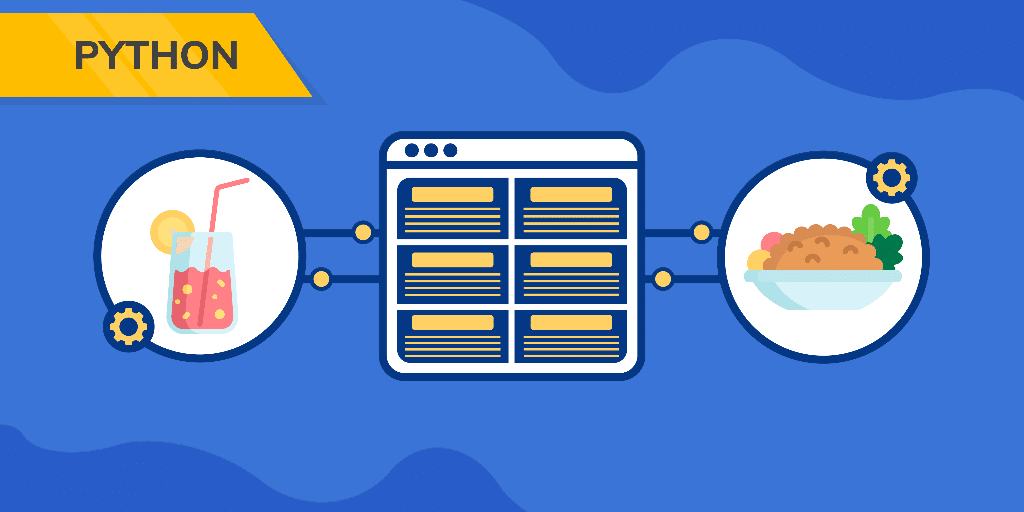

Review: Fetch Recipes with TheMealDB & TheCocktailDB APIs in Python — Free AI Course
Introduction
This review covers “Fetching Recipes with TheMealDB and TheCocktailDB APIs in Python – Free AI-Powered Course,” a short, practical course that teaches how to interact with two public recipe/drink APIs using Python. The course promises to “gain insights into using TheMealDB and TheCocktailDB APIs in Python” and to “discover request structures, endpoints, and demo applications to search recipes efficiently.” Below I provide an objective, detailed assessment of the course content, presentation, strengths, and limitations to help potential learners decide whether it fits their needs.
Product Overview
Product: Fetching Recipes with TheMealDB and TheCocktailDB APIs in Python – Free AI-Powered Course
Manufacturer / Provider: Free AI-Powered Course (course title indicates an AI-assisted curriculum; no specific institution or company is listed with the product metadata)
Product Category: Online tech tutorial / developer training — API integration, Python programming
Intended Use: Teach developers, hobbyists, and learners how to call TheMealDB and TheCocktailDB REST APIs from Python, understand endpoints and request formats, parse JSON responses, and build simple demo applications that search and display recipes and drink data.
Appearance, Materials & Overall Aesthetic
As a digital course, the “appearance” refers to the learning materials and presentation style rather than a physical product. The course is presented as a compact, practical module with the following observable characteristics:
- Presentation style: step-by-step instructional format that mixes concise explanations with code examples. The layout is utilitarian and focused on clarity rather than elaborate visuals.
- Materials: short textual lessons, inline code snippets (Python), and demo application descriptions. Expect readable request/response examples (HTTP request examples and JSON payloads) and small self-contained demo projects rather than long lectures.
- Design features: emphasis on practical examples and endpoint usage. If “AI-powered” refers to automated explanations or a chatbot that expands on topics, the course likely uses AI-generated guidance to clarify API usage or to demonstrate code variations.
Overall the aesthetic is minimal and developer-centric: code-first, example-rich, and optimized for quick comprehension rather than immersive multimedia.
Key Features & Specifications
- APIs covered: TheMealDB (meals/recipes) and TheCocktailDB (drinks/cocktails)
- Programming language: Python (HTTP requests, JSON parsing)
- Topics included: request structures, endpoints overview, parsing results, example queries for searching recipes and cocktails
- Demo applications: small example apps that demonstrate how to search and display recipes/drinks
- Format: short, focused lessons with code snippets and demo guidance
- Cost: free (as indicated by the product title)
- Target audience: beginners and intermediate Python developers who want hands-on, API-specific examples
- Prerequisites: basic familiarity with Python and installing packages (requests or http client libraries); no in-depth backend or deployment knowledge required
Experience Using the Course — Scenarios & Detailed Insights
1) Absolute Beginner to APIs
If you’re new to APIs but comfortable with basic Python syntax, this course provides a gentle, concrete entry point. The code examples and sample endpoints demystify how to form HTTP GET requests and interpret JSON responses. The bite-sized demos make it straightforward to see immediate results (e.g., listing meals or searching cocktails by ingredient).
Strengths in this scenario: accessibility, immediate hands-on examples, no cost barrier. Limitations: the course assumes some familiarity with installing Python packages and running scripts; complete novices may need an additional primer on virtual environments or pip.
2) Building a Simple Recipe Search App (Prototype)
The demo applications are very useful for rapid prototyping. Following the examples, you can assemble a minimal Flask or Streamlit interface within an hour to let a user search for a meal or cocktail and display details (ingredients, instructions, images). The course covers the essential endpoints and sample payloads required for such functionality.
Practical notes: the course provides the building blocks, but you will need to add UI/UX polish, error handling, and caching for production use. Examples focus on fetching and displaying data; full-stack concerns (deployment, security, rate-limiting) are not covered deeply.
3) Data Collection & Analysis
For quick data collection tasks (scraping recipe metadata for small analyses), the course demonstrates how to iterate over endpoints and parse JSON results. It is adequate for small datasets or dashboards.
Caveat: it does not present best practices for large-scale ingestion, API throttling, or respectful use (rate-limits/caching). If your use-case involves heavy automated requests, you’ll need to plan further for throttling, retries, and storage.
4) Classroom or Workshop Use
The focused nature of the course makes it suitable for a short workshop segment: show how an API works, run demos, let students modify code. Because it’s free and concise, instructors can adapt it into a 60–90 minute lab.
Recommendation for instructors: prepare a short primer on Python environment setup, and prepare extra exercises covering error handling and small UI enhancements to extend the lesson.
5) Experienced Developer Looking for Advanced Techniques
Experienced developers will find the course useful as a quick refresher on the specific endpoints and sample requests for TheMealDB and TheCocktailDB. However, it stops short of advanced topics like authenticated API integration (these public APIs may not require auth), robust retry logic, asynchronous requests, monitoring, or packaging libraries for reuse.
Conclusion for this user group: good quick reference, not an advanced training resource.
Pros
- Free and easy to access — low barrier for experimentation and learning.
- Practical, example-driven lessons that show real API request/response patterns.
- Covers two complementary public APIs (meals and cocktails) — useful for combined recipe/drink apps.
- Concise demos make it quick to get an end-to-end prototype running.
- Clear focus: request structures, endpoints, and demo applications — minimal fluff.
Cons
- Limited depth — advanced topics (error handling, retries, rate-limiting, caching, testing, deployment) are not thoroughly covered.
- Materials are primarily code snippets and textual explanations; if you prefer video walkthroughs or interactive notebooks, those may be lacking.
- No formal instructor support or community forum is mentioned in the product metadata; learners may need to seek help elsewhere for troubleshooting.
- Because APIs and endpoints can change, static examples may become outdated; the course may require occasional updates to remain current.
- Assumes a baseline level of Python knowledge; complete beginners may need supplementary setup guidance (virtualenvs, pip installs).
Conclusion
Overall, “Fetching Recipes with TheMealDB and TheCocktailDB APIs in Python – Free AI-Powered Course” is a focused, practical resource well-suited for beginners and intermediate developers who want quick, hands-on experience calling simple REST APIs in Python. Its strengths are its clarity, concrete examples, and the fact that it covers two useful public APIs relevant to recipe and drink applications. For prototyping, classroom demos, and quick reference, it delivers good value—especially because it is free.
However, if you need a deep dive into production-ready API integration (robust error handling, scalability, authentication models where applicable, asynchronous patterns, or deployment workflows), you will need to supplement this course with additional resources. Likewise, learners who prefer video instruction or interactive notebooks might find the format minimalist.
Final impression: a practical, no-cost starter course that provides the essential building blocks for working with TheMealDB and TheCocktailDB in Python. Recommended for learners who want fast, example-driven instruction and are prepared to extend the examples for production use.


Leave a Reply