

Introduction
This review covers “Google Gemini for Beginners: From Basics to Building AI Apps – AI-Powered Course,” a hands‑on learning offering designed to introduce learners to Google Gemini’s capabilities and to teach them how to build simple AI applications. The review evaluates the course scope, presentation, learning materials, real‑world usefulness, and who will benefit most from enrolling.
Brief Overview
Product title: Google Gemini for Beginners: From Basics to Building AI Apps – AI-Powered Course
Manufacturer / Provider: The course is centered on Google’s Gemini model and its ecosystem. The exact course publisher/platform isn’t specified in the brief description; many Gemini tutorials and official training modules are offered through Google Cloud, Google AI, or third‑party learning platforms. Buyers should check the enrollment page for the precise provider and certification details.
Product category: Online educational course — AI / machine learning / developer training.
Intended use: Teach beginners how to use Google Gemini’s text and image capabilities (text‑to‑text and image‑to‑text), learn prompting techniques, integrate with tools like Vertex AI, and build simple AI applications or prototypes. Ideal for developers, product managers, data practitioners, or curious learners wanting a practical introduction to Gemini.
Appearance, Materials & Course Design
As an online course rather than a physical product, the “appearance” relates to the course interface, lesson visuals, and learning assets. Based on the description and common patterns for similar Google‑centric courses, you can expect:
- Clean, minimal UI typical of professional e‑learning platforms: video player, module list, progress tracker.
- Presentation slides and visual examples showing model outputs (text completions, image annotations, multi‑modal examples).
- Code samples and interactive notebooks (likely in Python) for hands‑on labs demonstrating API calls, prompt patterns, and integration with Vertex AI or other cloud tools.
- Downloadable assets such as sample datasets, templates, and cheat sheets for prompting and deployment.
Unique design features to look for:
- Step‑by‑step guided labs that let beginners get live practice with Gemini’s text and image features.
- Project‑based modules focused on building a small, end‑to‑end AI app — which helps translate concepts to production‑like workflows.
- Emphasis on prompting strategies and real‑world examples rather than only theory, which is useful for immediate application.
Key Features & Specifications
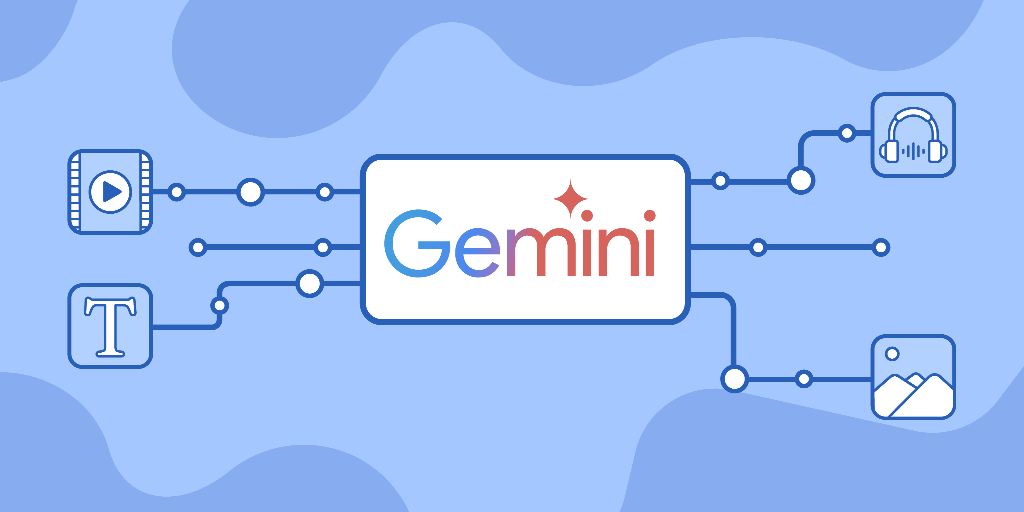
- Core topics covered: Text‑to‑text, image‑to‑text (multimodal inputs), prompting techniques, and workflow enhancements.
- Practical focus: Building simple AI apps and end‑to‑end examples to connect model outputs to usable applications.
- Tool integrations: Instruction on using Vertex AI or similar Google Cloud tools to deploy or scale models (where applicable).
- Hands‑on materials: Code examples, notebooks, and guided labs for applying concepts in real time.
- Target level: Beginner — designed for learners with limited prior experience in LLMs or multimodal models.
- Learning outcomes: Competence in prompting, familiarity with Gemini’s capabilities, ability to prototype simple AI apps.
- Format & accessibility: Likely a mix of videos, text lessons, and interactive exercises; check the provider for subtitles, transcripts, and downloadable content.
- Assessment: May include quizzes or project checkpoints to validate understanding — confirm on the course page.
Experience Using the Course — Scenarios & Observations
1. Absolute Beginner (No prior LLM experience)
The course is accessible for beginners who know basic programming concepts. Introductory modules that explain model behavior, prompt structure, and typical inputs/outputs are especially valuable. New learners benefit from:
- Clear terminology explanations and simple examples demonstrating how text‑to‑text and image‑to‑text work.
- Guided code snippets that show how to call APIs, format prompts, and interpret responses.
- Project templates that reduce setup friction so learners can focus on concepts rather than infrastructure.
2. Intermediate Developer (Some ML / API experience)
Developers with previous API or ML exposure will appreciate the practical lab work and deployment guidance; they can quickly adapt the sample apps into prototypes. The course offers:
- Prompt engineering patterns that can be immediately tested and refined.
- Integration patterns for Vertex AI or similar services, which are helpful to move from prototype to a more robust deployment.
- Opportunities to extend examples into larger apps (webhooks, serverless functions, front‑end integration).
3. Product / Non‑technical Roles
Product managers or business stakeholders can gain a practical understanding of Gemini’s strengths and limitations. The course helps in scoping projects and setting realistic expectations for:
- Which tasks are well suited for Gemini (summarization, classification, multimodal understanding) versus where specialized approaches are better.
- Estimating the engineering effort for integrating model outputs into user‑facing features.
4. Building and Prototyping an AI App
The hands‑on project elements give a clear path from concept to prototype. Typical workflow:
- Experiment with prompts and multimodal inputs in sandbox environments.
- Use provided code to connect Gemini to a small backend endpoint or notebook.
- Iterate on prompt structure, error handling, and post‑processing of model outputs for reliability.
This pragmatic approach is the most valuable part of the course for learners who want to ship working demos quickly.
5. Limitations & Real‑World Caveats Experienced
- Provider differences: The exact availability of hands‑on labs or Vertex AI access may depend on the course platform and whether learners have cloud credits or appropriate accounts.
- Rapidly evolving tech: Gemini and associated APIs evolve quickly. Some details or code examples can become outdated — learners should cross‑check with official docs.
- Depth vs breadth: As a beginner course, depth into advanced model fine‑tuning, production‑grade deployment, or cost optimization may be limited.
Pros
- Practical, project‑oriented curriculum focused on building real AI apps rather than purely theoretical material.
- Explains both text and image capabilities (multimodal), which is increasingly important in modern AI applications.
- Emphasis on prompting techniques and workflow improvements — skills that transfer across models and platforms.
- Likely integration guidance for Vertex AI and Google tooling, which is beneficial for learners targeting Google Cloud deployments.
- Beginner friendly: designed to lower the barrier to entry and get learners to working prototypes quickly.
Cons
- Course provider details and exact credentials are not specified in the brief; verify the official publisher and any certification claims before enrolling.
- May not cover advanced topics deeply (fine‑tuning, production scaling, cost management) — additional courses may be required for production readiness.
- Hands‑on labs that rely on cloud services (Vertex AI or API access) may require separate accounts, billing, or credits, which could increase total cost or setup complexity.
- Because Gemini and tooling are evolving rapidly, some code snippets or API endpoints in the course could become outdated; learners should supplement with up‑to‑date official docs.
Conclusion
Google Gemini for Beginners: From Basics to Building AI Apps is a strong introductory course for those wanting a practical, hands‑on introduction to Gemini’s multimodal capabilities and prompt engineering. Its strengths are a pragmatic, project‑based approach and focus on real applications and integrations (like Vertex AI). For absolute beginners or developers seeking to prototype AI features quickly, the course provides valuable, actionable skills.
However, prospective learners should confirm the course provider, the specific learning assets included, and any cloud requirements before enrolling. If you require deep knowledge about large‑scale production deployment, fine‑tuning techniques, or advanced MLOps, plan to follow up with more specialized training.
Overall impression: A well‑targeted beginner course that balances theory and practice. It’s recommended for learners who want to move beyond conceptual understanding and start building AI‑enabled apps using Google Gemini and related tooling.
Who Should Buy This Course?
- Developers and engineers who want to prototype multimodal features quickly.
- Product managers and non‑technical stakeholders seeking practical understanding of Gemini capabilities.
- Students or hobbyists who want hands‑on exposure to prompt engineering and basic app integrations.
Note: This review is based on the course title and short description provided. For exact curriculum details, duration, pricing, and provider credentials, review the official course page before purchasing.

Leave a Reply