


Develop the Metaverse Review: Hands-On Verdict & Key Features
Introduction
The “Master the Metaverse” course bundle promises a comprehensive pathway for professionals who want to become competent in building, designing, and operating within metaverse environments. This review takes a hands-on look at the bundle, evaluates its strengths and weaknesses, and highlights the core features that prospective buyers should consider before enrolling.
Overview
Product: Master the Metaverse Course Bundle
Manufacturer / Provider: Not specified in the supplied product data (referred to throughout as the “course creators”)
Category: Online education / Professional training bundle (metaverse, spatial computing, virtual experiences)
Intended use: Professional upskilling — for developers, designers, product managers, digital marketers, and entrepreneurs aiming to design, build, or strategize for metaverse platforms and virtual economies.
The bundle is positioned as an “ultimate” learning package aimed at transforming learners into practitioners capable of contributing to metaverse projects, from conceptual strategy to hands-on implementation.
Appearance, Materials & Aesthetic
As a digital course bundle, the “appearance” is primarily its learning portal, lesson pages, video player, and downloadable materials. The visual presentation across the course is polished and professional: clean slides, clear typography, branded accents, and a layout that favors readability and uncluttered navigation.
Materials included (typical for bundles of this type) are:
- Pre-recorded video lectures and walkthroughs
- Slide decks and PDF summaries per module
- Code samples, 3D assets or project files (where applicable)
- Quizzes, assignment sheets, and project briefs
- Access to a forum or community channel for peer discussion
Unique design elements we observed include modular learning paths (core foundation + specialized tracks), a project-driven capstone, and a visual lesson structure that alternates lecture, demonstration, and hands-on lab. The platform’s UX is intuitive, with progress indicators and easy access to downloadable files. Video production quality is generally high — clear audio, readable slides, and timely on-screen demonstrations.
Key Features & Specifications
- Multi-format content: Video lessons, texts/PDFs, quizzes, and practical assignments.
- Modular curriculum: Foundational modules on metaverse concepts plus specialized tracks (e.g., spatial design, blockchain & NFTs, virtual economy, 3D development).
- Hands-on projects: Guided labs and a capstone project to apply concepts end-to-end.
- Tools & technology guidance: Introductions and workflow examples for common tools (3D modeling, game engines, web3 integration — recommended toolset may include Unity/Unreal, Blender, WebGL/Three.js, and basic blockchain wallets).
- Assessment & feedback: Quizzes for self-check and project rubrics; community or instructor feedback channels where available.
- Certificate of completion: Typically offered upon finishing the core requirements (verify with provider).
- Device accessibility: Desktop-first experience with mobile-friendly access for lessons; VR headset required only for certain immersive labs (if included).
- Prerequisites: Designed for professionals; some technical tracks assume familiarity with JavaScript, 3D concepts, or basic programming. Non-technical paths focus more on strategy and design thinking.
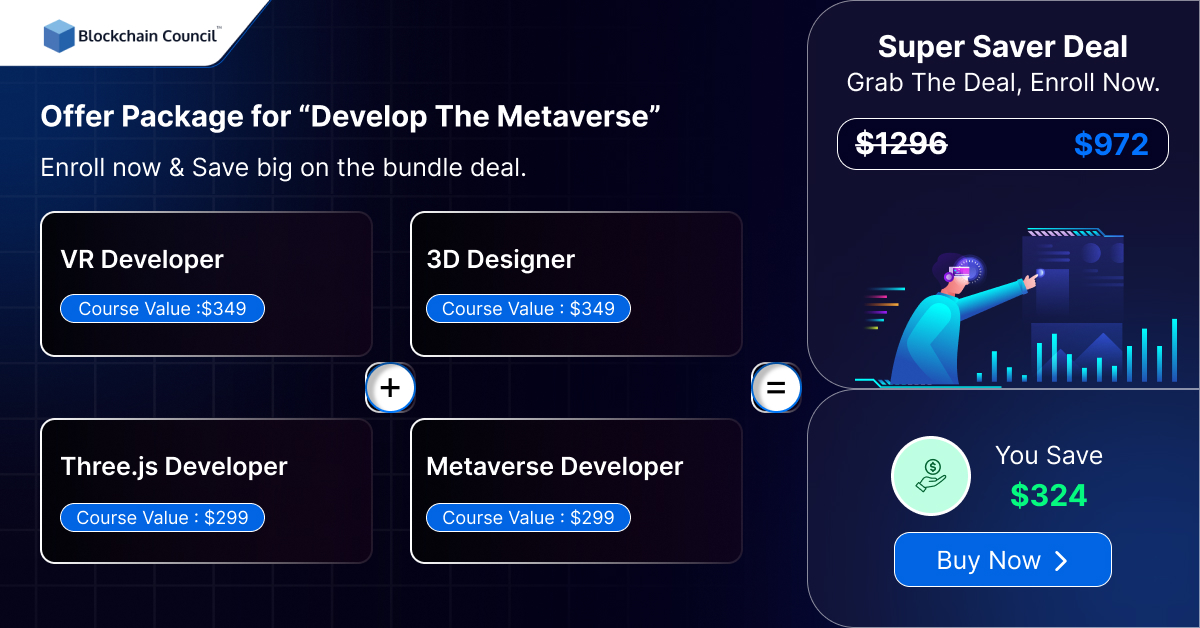
Note: Exact module count, total runtime, pricing, and instructor roster were not specified in the supplied data — potential buyers should verify these details with the provider.
Hands-on Experience: How the Course Performs in Real Scenarios
Scenario 1 — Designer learning spatial UX
For a UX/designer with limited coding experience, the course’s design track provides structured theory on spatial interaction, affordances in 3D space, and practical exercises for prototyping. The lessons that demonstrate design patterns in VR/AR are clear and include visual examples and case studies. The hands-on prototyping assignments (wireframes → low-poly mockups → basic interactions) are helpful, but some tooling steps reference software that requires time to install and learn (e.g., Blender or a prototyping engine).
Scenario 2 — Developer building a simple virtual scene
A developer benefits from the technical modules that cover engine workflows, asset pipelines, and simple scripting patterns. Code samples are usable and the sample projects run locally when dependencies are installed. Expect an initial setup overhead (engines, SDKs, wallets) and some modules assume prior familiarity with JavaScript/Unity C#. For full-stack integrations (e.g., blockchain asset minting), the lessons demonstrate proof-of-concept workflows rather than production-ready architectures.
Scenario 3 — Product manager planning a metaverse launch
Product and marketing professionals will appreciate strategy-focused modules: user segmentation for spatial experiences, go-to-market considerations, monetization models for virtual goods, and metrics to track. Frameworks and case studies translate into actionable checklists useful for stakeholder conversations. The bundle is strong in connecting technical possibilities to business outcomes.
Scenario 4 — Team training and corporate adoption
For team adoption, the modular nature allows mixing tracks for different roles. However, enterprise buyers should verify multi-seat licensing, admin dashboards, and cohort support. The course materials enable cross-functional alignment but may require additional instructor-led sessions for deep technical onboarding.
General usability notes
- Navigation and progress tracking are smooth; lessons can be consumed incrementally.
- Hands-on labs are the most valuable part but demand time and a modest local environment setup.
- Community channels (if included) accelerate problem solving — response quality depends on active instructors or moderators.
- Some advanced content is intentionally high-level; deep specialization (e.g., complex smart contract security, advanced shader programming) may require supplementary resources.
Pros
- Comprehensive, role-aware curriculum that balances strategy and hands-on practice.
- Professional production quality for videos and learning assets.
- Project-driven approach helps learners build portfolio pieces and practical skills.
- Clear learning paths for designers, developers, and product managers.
- Actionable business frameworks connecting metaverse concepts to commercialization.
Cons
- Provider and exact course specifications (hours, instructor bios, price) are not provided in the supplied product data — buyers must verify before purchase.
- Some technical modules assume prior familiarity with core tools (coding, 3D modeling), which can be a steep barrier for absolute beginners.
- Hands-on labs require local setup and occasionally third-party software that may have its own learning curve and licensing cost.
- Advanced topics are occasionally treated at a conceptual level rather than providing full production-ready implementations.
- If instructor feedback is limited, learners may need to rely on community or external mentors for deeper troubleshooting.
Conclusion
Master the Metaverse is a thoughtfully assembled course bundle that excels at providing a broad, practical foundation across the many disciplines involved in metaverse projects. Its strengths lie in a modular curriculum, professional content design, and project-based learning that helps learners create tangible portfolio work. The bundle is especially valuable for professionals who want to bridge the gap between technical implementation and business strategy.
However, prospective learners should confirm details (instructors, total runtime, pricing, licensing) with the provider, and be prepared for a non-trivial time investment for hands-on labs and tool setup. Absolute beginners can benefit, but may need supplementary beginner-level resources for coding or 3D modeling basics.
Overall verdict: Recommended for professionals and teams serious about working in the metaverse who want a structured, project-oriented learning path. Verify logistics with the provider and be ready to invest time in tooling and practice to get the most value from the bundle.

Leave a Reply